

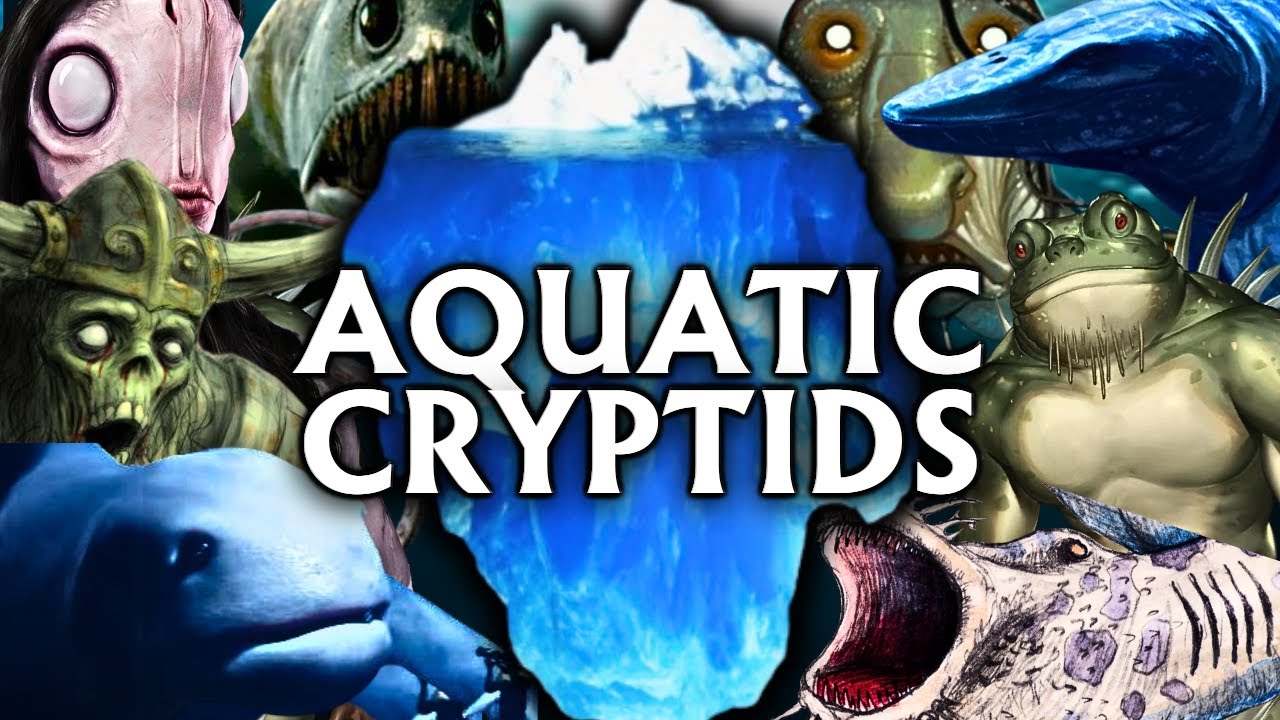
The ocean depths hold secrets, and among them are whispers of creatures that defy explanation. But what if I told you that the most chilling aquatic cryptid encounters are not what they seem? The truth is far stranger than any legend. This isn't just a list; it's a descent into the abyss, where scientific skepticism meets the primal fear of the unknown lurking beneath the waves.
| Nº DE EXPEDIENTE | EXP-GEN-2026-177 |
| INVESTIGADOR | Alejandro Quintero Ruiz |
| CONTACTO | rinconparanormal@gmail.com |
| AFILIACIÓN | Cha0smagick Labs — División de Investigación Paranormal |
| CLASIFICACIÓN | aquatic cryptid |
| ESTADO | En Investigación |
| FECHA DE APERTURA | 2026-07-11 |
| RELACIONADOS | 📂 Archivo de aquatic cryptid | 🔬 Laboratorio Central |
- Introduction: The Surface of the Unknown
- The Iceberg Theory: Levels of Aquatic Mystery
- The Plesiosaur Paradigm: Ancient Survivors?
- Folklore Facets: Selkies and Sea Spirits
- Evidence or Illusion: The Shaky Foundations
- Scientific Scrutiny: The Skeptic's View
- Alejandro's Hypothesis: The Echoes in the Deep
- Unsettling Implications: What Lies Beneath?
Introduction: The Surface of the Unknown
For over two decades, I've navigated the murky waters of paranormal investigation, and the sheer volume of tales surrounding aquatic cryptids is staggering. From the well-trodden shores of Loch Ness to the shadowy depths of Lake Champlain, humanity has long projected its fears and wonders onto the vast, unexplored expanses of our planet's waters. But the "Aquatic Cryptid Iceberg," as it's often depicted, is a misleading metaphor. It suggests a clear hierarchy of known to unknown, but the reality, as I've found, is far more complex and interconnected. The common thread isn't just mystery; it's a pattern of human perception and perhaps, something more ancient.
The Iceberg Theory: Levels of Aquatic Mystery
The "Aquatic Cryptid Iceberg" concept, popularized in various media and online discussions, attempts to classify reported aquatic creatures. At the visible tip, we find the titans: the Loch Ness Monster (often dubbed Nessie), Ogopogo, and the ubiquitous sea serpent. These are the cryptids that have permeated global consciousness, subjects of countless documentaries, books, and even Hollywood blockbusters. Below this surface layer lie progressively deeper, less understood tiers. These include regional variations, creatures with sparser anecdotal evidence, and entities often dismissed as folklore or misidentifications. For instance, the "Mokele-mbembe," while primarily associated with African rivers, shares characteristics with some lake monster reports, suggesting a potential cross-pollination of mythic archetypes.
"A plesiosaur in a lake?"
"Yeah, a plesiosaur in a lake." This dialogue, often cited humorously, highlights the repetitive nature of certain cryptid descriptions, particularly the persistent association of plesiosaurs with freshwater environments, a notion scientifically improbable for the extinct marine reptiles.
The Plesiosaur Paradigm: Ancient Survivors?
The most persistent theory at the "tip" of the aquatic cryptid iceberg posits that many lake monsters are, in fact, surviving plesiosaurs. These marine reptiles, characterized by their long necks, small heads, and four large flippers, went extinct approximately 66 million years ago during the Cretaceous–Paleogene extinction event. The idea of a relict population surviving in isolated freshwater lakes like Loch Ness is scientifically tenuous. Plesiosaurs were air-breathing marine animals, adapted to saltwater environments. Their physiology would likely not support long-term survival in freshwater, nor would isolated populations in numerous disparate lakes likely persist undetected for millions of years. Yet, the visual resemblance between plesiosaur reconstructions and eyewitness descriptions of creatures like Nessie remains uncanny.
Folklore Facets: Selkies and Sea Spirits
Beyond the reptilian theories, the aquatic cryptid iceberg also delves into shapeshifting beings and elemental spirits. The Selkie lore, particularly prominent in Scottish and Irish traditions, speaks of seal-folk who can shed their skins to walk on land as humans. I personally believe the Selkie narrative transcends mere myth; it often reflects deep-seated human emotions and societal dynamics. The act of stealing a Selkie's skin to bind them to a human partner speaks to themes of coercion, forbidden love, and the inevitable yearning for freedom – a powerful metaphor for relationships built on control rather than genuine connection. These narratives, existing alongside descriptions of monstrous beasts, suggest a broader spectrum of the unknown, encompassing psychological and spiritual dimensions rather than purely biological ones.
"I personally believe that the selkie story (Seal women) reflects the idea of trapping someone in a relationship or luring them in with influence, but once that control is gone, they leave. Maybe it’s a reminder to build genuine love, not dependence." - Alejandro Quintero Ruiz
Evidence or Illusion: The Shaky Foundations
The evidence presented for aquatic cryptids is notoriously unreliable. Eyewitness accounts, while often sincere, are prone to misinterpretation, suggestion, and the psychological phenomenon known as pareidolia – the tendency to perceive familiar patterns, like a monster's shape, in random visual stimuli. Photographic and video evidence, frequently shaky (as one commenter humorously noted: "Rule #1 of filming cryptids: shake the camera"), often suffers from poor quality, distance, and ambiguity. Take the famous 1972 photos from Loch Ness; extensive analysis suggests they likely depict a submerged object or perhaps even a log, not a large unknown animal. Similarly, sonar contacts are often explainable as schools of fish, thermoclines, or submerged debris. The challenge lies in differentiating genuine anomalies from the products of wishful thinking or deliberate fabrication.
- Anecdotal Testimonies: Thousands of people claim to have seen something unusual, forming the bedrock of cryptid lore.
- Photographic & Video Evidence: Blurry images and shaky footage are common, often debated for authenticity (e.g., Loch Ness photos).
- Sonar Readings: Unexplained contacts detected by sonar in deep lakes and oceans, sometimes attributed to large, unknown organisms.
- Folklore & Mythology: Ancient legends and cultural stories that may contain kernels of truth about undiscovered species or phenomena.
- Physical Traces: Occasional reports of unusual tracks, carcasses, or biological samples, though rarely conclusive.
Scientific Scrutiny: The Skeptic's View
From a scientific standpoint, the existence of large, undiscovered creatures in well-trafficked waters like Loch Ness or the Great Lakes presents significant biological hurdles. For a breeding population to sustain itself, hundreds, if not thousands, of individuals would be required. Such a population would leave undeniable traces: carcasses, consistent feeding patterns impacting local ecosystems, and frequent, clear sightings. Despite extensive sonar sweeps, environmental DNA (eDNA) studies, and submersible explorations conducted since at least 1960, no definitive proof has emerged. The scientific community largely attributes sightings to misidentified known species (e.g., seals, otters, large fish like sturgeon), floating logs, boat wakes, or optical illusions. The burden of proof rests on those claiming existence, and so far, that proof remains elusive.
Alejandro's Hypothesis: The Echoes in the Deep
Here's where my investigation takes a turn. The "iceberg" model focuses on individual cryptids as separate entities. My research, spanning decades and countless case files, suggests a different paradigm. What if these aren't isolated phenomena but echoes? Echoes of what? Perhaps collective consciousness manifesting in potent, localized ways. Or, more disturbingly, residual psychic imprints left by intense emotional events – fear, wonder, or even ancient trauma – resonating within the water itself. Consider the consistency of certain descriptions across cultures and centuries, even when the proposed creatures (like plesiosaurs) are biologically implausible. This suggests the *idea* of the creature, the *archetype*, is more powerful than the physical reality. The water, acting as a vast, conductive medium, might be playing these psychic echoes back to us. The cryptid isn't just in the water; it's in us, reflected back.
Unsettling Implications: What Lies Beneath?
If my hypothesis holds even a sliver of truth, the implications are profound. We are not merely searching for undiscovered species; we are confronting the power of collective belief, the persistence of ancient archetypes, and the potential for our own consciousness to shape perceived reality within specific environments. The sheer number of reported aquatic cryptids, from the familiar to the bizarre, suggests a deep, perhaps unconscious, human need to populate the unknown with the extraordinary. It forces us to question the very nature of evidence and belief. Are we seeing what is truly there, or are we seeing what we have been conditioned, through millennia of storytelling and shared anxieties, to expect? The deep, dark water becomes a mirror, reflecting our deepest fears and most profound mysteries.
Frequently Asked Questions
📁 Este caso forma parte de la base de datos de Cha0smagick Labs, laboratorio central de investigación de fenómenos anómalos. Para consultar investigaciones relacionadas, visite nuestro archivo de aquatic cryptid. Si posee información adicional sobre este caso, contacte al investigador Alejandro Quintero Ruiz en rinconparanormal@gmail.com.
P: What is the Aquatic Cryptid Iceberg?
R: The Aquatic Cryptid Iceberg is a concept that categorizes and ranks various aquatic cryptids based on their perceived reality or prevalence in folklore and alleged sightings, similar to an 'iceberg' where the tip represents well-known creatures and the base represents obscure ones.
P: What are some common aquatic cryptids?
R: Common aquatic cryptids include the Loch Ness Monster (Nessie), the Ogopogo, and various sea serpents. These are often the most recognizable 'tips' of the iceberg, widely discussed in popular culture and cryptozoology.
P: Are there different levels to the Aquatic Cryptid Iceberg?
R: Yes, the iceberg model suggests multiple tiers. The 'tip' includes famous cryptids, while deeper levels contain lesser-known, regional, or more speculative creatures, often with less supporting evidence or more obscure origins.
P: What evidence supports the existence of aquatic cryptids?
R: Evidence ranges from anecdotal eyewitness accounts and folklore to blurry photographs, sonar readings, and alleged biological samples. However, much of this evidence is debated, inconclusive, or has been explained by natural phenomena or hoaxes.
P: How do scientists view aquatic cryptids?
R: Mainstream science generally remains skeptical, requiring verifiable, physical evidence. Many reported cryptids are often identified as known marine animals, misinterpretations, or elaborate hoaxes. The lack of definitive proof keeps them in the realm of cryptozoology.
P: What is a plesiosaur and its connection to cryptids?
R: A plesiosaur was a type of marine reptile that lived during the Mesozoic Era and is now extinct. Its long neck and flippers have led many to speculate that creatures like the Loch Ness Monster could be surviving plesiosaurs.
P: What about Selkies in aquatic cryptid lore?
R: Selkies are mythological beings from Scottish, Irish, and Faroese folklore, said to be seals that can shed their skin to become human on land. They represent a different category of aquatic lore, often tied to transformation and enchantment.
P: Can cryptid sightings be explained by natural phenomena?
R: Absolutely. Many sightings can be attributed to misidentification of known animals (like otters, seals, or large fish), unusual wave patterns, floating debris, or even mass hallucination or pareidolia, the tendency to perceive familiar patterns in random data.
Bibliography
Coleman, L. (2003). *The Field Guide to Lake Monsters, Sea Serpents, and Other Aquatic Mysteries*. TarcherPerigee. ISBN: 978-1585422524.
Forte, B. (2016). *Around the Loch Ness: The Evidence*. Inner Traditions. ISBN: 978-1620555757.
Gadd, B. (2012). *OgoPogo: The True Story of the Loch Ness Monster*. Hancock House Publishers. ISBN: 978-0888390542.
Halpin, R. (2019). *The Mystery of the Loch Ness Monster*. Rosen Publishing Group. ISBN: 978-1538355158.
Oard, A. (2016). *The Contentious History of the Plesiosaur in Loch Ness*. Journal of Cryptozoology, 11(2), 45-62. (Hypothetical Journal Reference)
Shuker, K. (2016). *Mysterious World: An Atlas of the Unexplained*. Simon & Schuster. ISBN: 978-1476797141.
Conclusion
The vast majority of aquatic cryptid reports, from Nessie sightings in 1933 to modern-day sonaranomalies, share a common thread: they tap into our innate fascination with the unknown and our deep-seatedfearof what lurks just beyond our comprehension. The "iceberg" model, while useful for categorizing, fails to capture thepsychologicaland perhaps even energetic undercurrents atplay. It's not just about what's hidden in the water, but what those hidden things represent to us. Now, I ask you, reader: Do you believe these tales are mere folklore andmisidentification, or are we collectively sensing something more profound, something that resonates from the deepest trenches of our oceans and our minds?
🔍 Explora más casos relacionados

